Philly Fair Trade Roasters
Costa Rica Las Lajas
Tasting Notes - Sweet Citrus • Honeyed Brightness • Clean Finish
Why You'll Love It
Grown in the Central Valley of Costa Rica, this coffee benefits from high elevations, rich volcanic soil, and consistent weather that create ideal growing conditions. The result? A cup that’s bright, clean, and naturally sweet.
🚚 Free Shipping over $40 — Roasted fresh & typically ships in 1-3 business days.
Couldn't load pickup availability
Share

-
Small Batch & Fresh Roasted to Order
Our beans are small batch roasted to ensure the quality you deserve and want. We roast multiple days a week so your beans aren't just sitting and waiting for a home, they're here for you.
-
Free Shipping Over $40
We ship three days a week via USPS & UPS to ensure you get your beans quickly.
-
Why Order from Us?
We are a Google designated Top Quality Store, with our beans currently on the shelf at both Whole Foods Markets and Kimberton Whole Foods as well as a USDA Organic facility via PCO and Fairtrade USA compliant.
The Story Behind the Beans
The Central Valley of Costa Rica is the heart of the country’s coffee industry. The high elevation, consistent weather patterns, frequent rains, and volcanic soil contribute to the wide range of offerings we are able to source from this region. Producers in the Central Valley often grow traditional hybrids and apply some of Costa Rica’s most forward-thinking processing techniques.
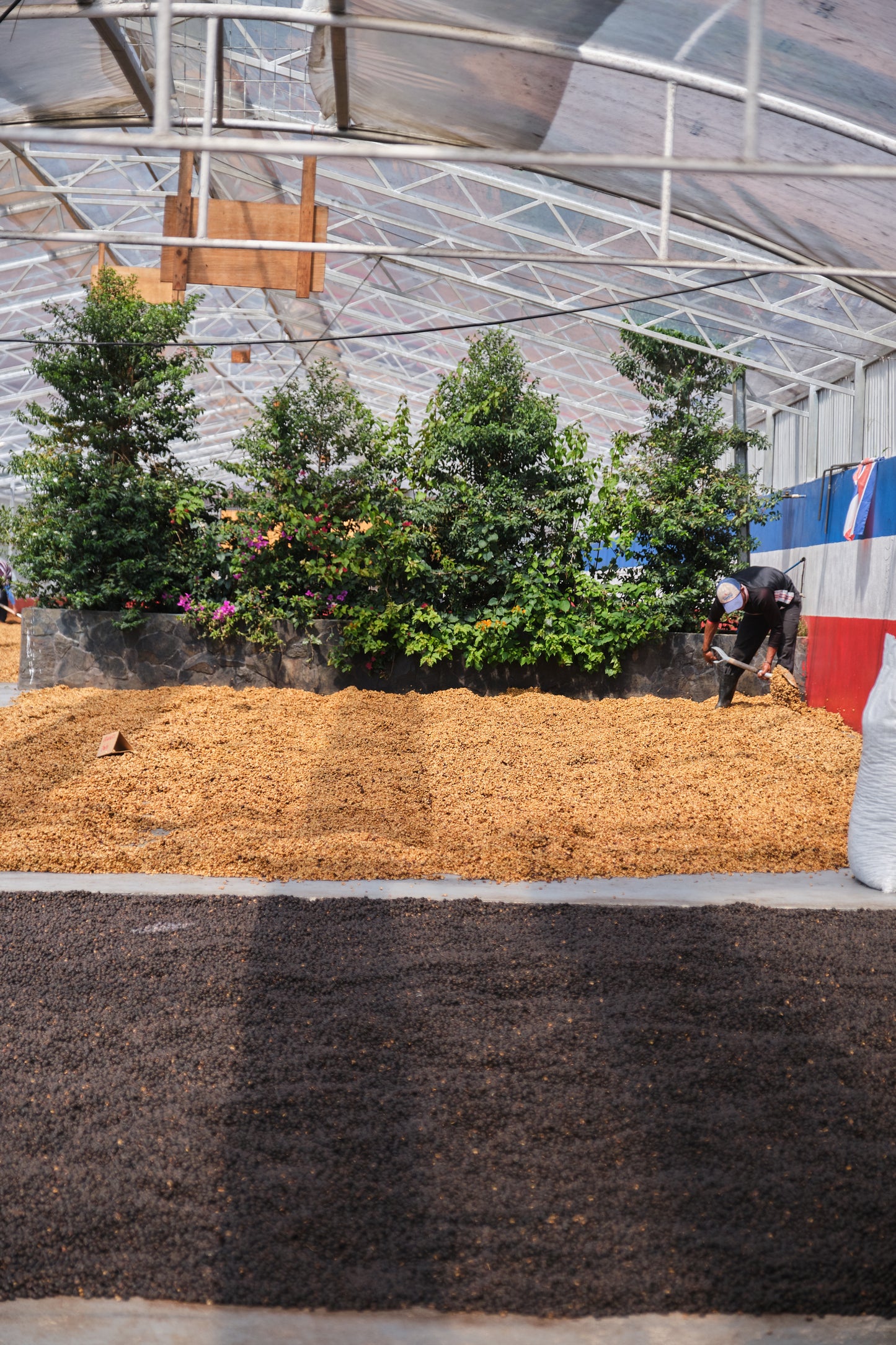
The process is a technique called 'Double Diamond.' This process was developed by Las Lajas over the course of four years. It is one of the most intentional and complex processes we have yet to come across. This process starts at the farm, selecting cherries from the healthiest coffee plants and delivering them soon after to the mill. Here the cherries are meticulously sorted and after selecting the most uniform and ripest ones, these cherries are placed in sealed tanks for an average period of 72 hours to undergo an anaerobic fermentation process. This process is deemed “complete” once the Brix and pH levels measure to desire. After this, the cherries are moved to raised beds inside a covered drying space. The entire goal with this curing process is to extend this process for as long as possible, without “stalling” the gradual drying of these cherries. This is truly a passive “curing” process that results in a sweeter, clean and bright cup.